Every day your store attracts visitors who browse, add products to their cart, and then disappear without buying.
The frustrating part is that most eCommerce brands assume they need more traffic when the real problem is that their store is leaking revenue at critical conversion points.
The good news? You don’t always need a bigger ad budget to grow sales. You need a better conversion strategy. The brands winning in today’s competitive eCommerce landscape are systematically identifying what prevents shoppers from purchasing and fixing those issues before they become lost revenue.
According to Baymard Institute research, the average cart abandonment rate remains above 70%, meaning most online stores lose more potential buyers than they convert.
This guide breaks down 15 proven ways to increase conversions, backed by industry research, brand examples, and practical actions you can implement immediately.
Why eCommerce Conversion Rates Matter More Than Traffic
Many brands focus on acquiring more visitors through paid ads, SEO, and social media campaigns.
But consider this:
If your store converts at 1.5%, doubling traffic is expensive.
If you improve conversions from 1.5% to 3%, you’ve effectively doubled revenue from existing traffic.
Shopify reports that average eCommerce conversion rates typically fall between 2.5% and 3%, yet small improvements often generate significant revenue gains.
Brands that prioritize conversion rate optimization (CRO) create more profitable growth because every marketing dollar works harder.
Most stores have hidden conversion killers that aren’t obvious from analytics alone.
Find What’s Blocking Conversions Before Spending More on Ads.
1. Improve Site Speed
Shoppers expect instant experiences.
Even a one-second delay can create friction that reduces conversions and increases bounce rates. Mobile shoppers are especially sensitive to slow-loading pages.
Focus on:
- Compressing images
- Removing unnecessary scripts
- Improving Core Web Vitals
- Optimizing mobile performance
2. Simplify Navigation
Visitors should find products within seconds.
Clear categories, intuitive menus, and smart search functionality reduce confusion and improve product discovery.
Brands like Amazon continuously optimize navigation because simplicity directly impacts revenue.
3. Strengthen Product Pages
Product pages often determine whether a visitor buys or leaves.
High-performing pages typically include:
- Detailed product descriptions
- Multiple product images
- Customer reviews
- Shipping information
- Clear return policies
4. Add More Social Proof
Trust reduces buying hesitation.
Customer reviews, ratings, user-generated content, and testimonials help shoppers feel confident.
Research from store audits consistently shows trust signals remain one of the most overlooked conversion factors.
5. Optimize for Mobile Users
Mobile traffic dominates eCommerce.
Yet mobile abandonment rates remain significantly higher than desktop.
Review your store from a customer’s perspective:
- Is checkout easy?
- Are buttons easy to tap?
- Does content load quickly?
Small improvements often produce outsized gains.
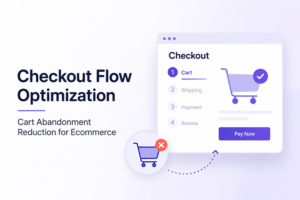
6. Reduce Checkout Friction
Baymard’s checkout usability research has repeatedly shown that unnecessary friction contributes heavily to abandoned purchases.
Remove obstacles such as:
- Mandatory account creation
- Excessive form fields
- Unexpected fees
- Complicated checkout flows
7. Offer Guest Checkout
Many customers simply want to complete their purchase quickly.
Forcing account creation introduces friction at the worst possible moment.
Guest checkout consistently improves completion rates.
8. Display Shipping Costs Early
Unexpected shipping fees remain one of the biggest reasons shoppers abandon carts.
Transparency builds trust and reduces surprises.
9. Use Strategic Product Recommendations
Relevant recommendations can increase both conversions and average order value.
Modern recommendation engines focus on purchase intent rather than clicks alone because conversion-focused recommendations produce stronger revenue outcomes.
10. Personalize the Shopping Experience
Personalization is becoming a competitive necessity.
Retailers increasingly use AI to tailor recommendations, messaging, and product discovery experiences. Companies investing in AI-powered shopping experiences are seeing stronger engagement and revenue outcomes.
CTA: Fix Conversion Issues While Visitors Are Still Shopping
Most optimization tools tell you what happened after visitors leave.
Eulav’s intelligent recovery engine detects cart abandonment behavior in real time, helping brands identify friction before revenue disappears.
Instead of guessing, discover exactly what is preventing customers from buying and fix it immediately.
11. Recover Abandoned Carts More Effectively
Cart abandonment remains one of the largest revenue opportunities in eCommerce.
See what Revvy finds in your own store, no card required.
Industry data shows more than 70% of carts are abandoned.
Traditional email recovery helps, but modern brands increasingly focus on identifying abandonment signals before customers leave.
Case Study Insight
A recent eCommerce discussion highlighted how optimization and recovery systems generated more than $24,000 in additional attributed revenue without increasing advertising spend.
The lesson is simple: recovering existing demand is often more profitable than buying new traffic.
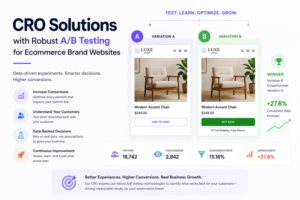
12. Run Continuous A/B Tests
Winning brands rarely rely on assumptions.
They test:
- Headlines
- Product images
- CTA buttons
- Pricing displays
- Checkout experiences
Small gains compound over time.
13. Improve Trust Signals
Trust influences every stage of the customer journey.
Add:
- Security badges
- Customer reviews
- Contact information
- Clear refund policies
- Money-back guarantees
Trust-building elements often produce immediate conversion improvements.
14. Leverage AI-Powered Conversion Optimization
AI is rapidly reshaping eCommerce.
Recent market data shows shoppers arriving through AI-driven experiences spend more and generate higher revenue per visit.
Forward-thinking brands are using AI not only for customer support but also for conversion optimization, behavioral analysis, and revenue recovery.
This is where platforms like Eulav stand out.
Rather than providing generic reports, Eulav audits your store, uncovers hidden conversion blockers, and prioritizes the actions most likely to increase revenue.
15. Audit Your Store Regularly
The highest-converting stores aren’t perfect.
They’re constantly improving.
Customer behavior changes. Competitors evolve. Technology advances.
Regular audits help identify:
- Conversion bottlenecks
- UX issues
- Mobile problems
- Checkout friction
- Revenue leaks
Brands that audit continuously tend to outperform those that optimize only occasionally.
Growth happens when you remove friction, improve customer experiences, and systematically fix the issues preventing shoppers from buying.
What Leading eCommerce Brands Are Doing Differently in 2026
Several market trends are shaping conversion optimization today:
- AI-powered shopping experiences are becoming mainstream.
- Retailers are investing heavily in personalization.
- AI-generated product experiences are improving engagement and conversions.
- Brands are focusing more on customer experience than pure traffic acquisition.
The brands adapting fastest are capturing disproportionate growth.
FAQs: How to Increase eCommerce Conversion Rates
Most eCommerce stores convert between 2% and 3%, though top-performing stores often exceed 4% depending on industry and traffic quality.
Common causes include slow site speed, poor mobile experience, lack of trust signals, confusing navigation, and checkout friction.
Start by auditing your store, improving checkout usability, reducing cart abandonment, strengthening product pages, and fixing mobile UX issues.
In many cases, yes. Improving conversions increases revenue from existing traffic, often producing better ROI than spending more on acquisition.