Promotional gift campaigns represent one of the highest-leverage mechanisms available to ecommerce operators, yet the majority underperform due to structural misalignment between offer design and consumer decision psychology. This paper presents an evidence-informed framework for constructing gift campaigns that systematically influence cart behavior, checkout completion, and repeat purchase probability.
1. The Foundations
a. The Conversion Architecture Problem
Conventional promotional campaigns fail not due to lack of consumer interest in free goods, but due to a fundamental misdiagnosis of where buying decisions occur. Effective gift campaign architecture must intervene at three discrete behavioral inflection points:
- T₁ : The add-to-cart decision
- T₂ : The checkout completion decision
- T₃ : The return-purchase decision
Most operators optimize exclusively for T₁. High-performing stores treat all three as interdependent variables within a single conversion system.
b. Perceived Value Ratio and Threshold Incentive Effects
Consumer response to gift offers is not proportional to the objective monetary value of the gift. Rather, it is mediated by the perceived gain-to-effort ratio, the subjective calculation of reward relative to behavioral cost.
Empirical evidence from a controlled skincare brand comparison illustrates this mechanism:
| Offer Condition | Structure | AOV Impact |
|---|---|---|
| Unconditional gift | Free sample on all orders | Baseline |
| Threshold gift | Free premium kit at $75+ | +32% AOV |
The threshold model creates a cognitive gap between the customer’s current cart value and the reward boundary, a well-documented motivational mechanism in behavioral economics. Unconditional gifting, by contrast, eliminates this gap and therefore forfeits its primary conversion lever.
2. Structural Design Principles
a. Conditional Gifting as an AOV Optimization Tool
Gift campaigns should be architecturally tied to spending thresholds rather than distributed unconditionally. This design exploits goal-gradient motivation: proximity to a reward increases the rate of approach behavior.
Validated threshold structures include:
- Minimum spend triggers (e.g., spend $50 – free gift)
- Quantity-based triggers (e.g., buy 2 items – bonus product)
- Bundle-upgrade triggers (e.g., premium reward on composite purchases)
Threshold calibration is non-trivial. Platforms such as Revvy AI provide behavioral pricing analysis to identify the precise spend boundary at which incremental cart additions become most probable without triggering decision fatigue.
b. Touchpoint Placement and High-Intent Surfaces
Gift offer visibility must be concentrated at decision-proximal touchpoints, not distributed across low-intent surfaces such as homepages or generic banners. High-efficacy placement zones include:
- Product detail pages: immediately adjacent to the primary call-to-action
- Cart interface: prior to checkout initiation
- Exit-intent overlays: at the moment of session abandonment
This principle is consistent with broader CRO literature: conversion gains are more reliably achieved by optimizing high-intent surfaces than by increasing aggregate traffic volume.
c. Urgency Mechanisms and Scarcity Signaling
Gift campaigns operating without temporal or quantity constraints decay into ambient noise, as customers defer decisions indefinitely. Effective urgency scaffolding includes:
- Time-bounded offer windows
- Inventory-constrained gift availability
- Countdown mechanisms tied to offer expiration
Critical caveat: Manufactured urgency, scarcity signals that do not reflect genuine constraints, produces measurable trust degradation and elevated abandonment rates. All urgency mechanisms must correspond to real operational parameters.
3. Advanced Optimization Protocols
a. Behavioral Segmentation and Offer Personalization
Uniform gift offers applied across heterogeneous visitor segments represent a significant optimization failure. A segmented approach allocates gift value in proportion to conversion probability and customer lifetime value potential:
| Visitor Segment | Recommended Gift Tier |
|---|---|
| First-time visitors | Entry-level gift (acquisition-focused) |
| Returning users | Mid-value reward (retention-focused) |
| High cart-value users | Premium bundle (maximization-focused) |
Behavioral segmentation at this resolution requires pattern recognition across large data sets, a function well-suited to AI-driven CRO platforms such as Revvy AI, which maps behavioral signals to offer recommendations probabilistically.
b. Product Page Integration
The gift offer should not function as an external promotional layer but as an embedded component of the product experience. Structural integration techniques include:
- Visual presentation of the gift as part of the purchase bundle
- Comparative value display (with gift vs. without gift)
- Microcopy reinforcement proximate to the primary CTA
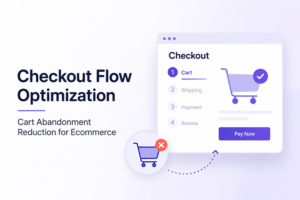
c. Friction Reduction at Checkout
A frequently observed failure mode is requiring manual gift addition by the user. Each additional step in the redemption process introduces abandonment risk. Best-practice protocols include:
- Automatic gift application upon condition satisfaction
- Transparent savings display within the checkout interface
- Elimination of ambiguous or multi-step redemption flows
Research on cart abandonment behavior consistently demonstrates that minor confusion events at checkout can negate the entire upstream conversion effect of a well-designed gift campaign.
4. Empirical Case Evidence
A controlled implementation by an ecommerce electronics operator utilized a tiered conditional gifting model:
See what Revvy finds in your own store, no card required.
- Tier 1: $100+ spend – free accessory
- Tier 2: $200+ spend – premium add-on
A real-time progress bar was surfaced within the cart interface to maintain goal-gradient motivation throughout the session.
Observed outcomes (30-day measurement window):
| Metric | Change |
|---|---|
| Average Order Value | +28% |
| Conversion Rate | +17% |
| Cart Abandonment Rate | −22% |
The data suggest that performance gains were attributable not to gift value per se, but to the structural integration of the offer within the buying journey, consistent with the theoretical framework presented in Section 1.
5. Measurement and Optimization Infrastructure
Evidence-based campaign management requires continuous instrumentation across three primary performance variables:
- Conversion rate: the proportion of sessions resulting in completed purchase
- Average order value: mean transaction size across completed orders
- Cart abandonment rate: the proportion of cart-initiated sessions that do not convert
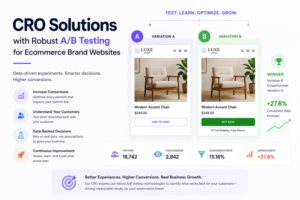
Recommended tooling includes heatmap and session recording platforms for friction identification, A/B testing infrastructure for offer validation, and AI-driven CRO platforms like Revvy AI for integrated diagnostic and optimization workflows.
6. Conclusions
The evidence supports the following operational conclusions:
- Unconditional gift campaigns are structurally inferior to threshold-conditioned models on AOV and revenue metrics
- Gift offer placement must be concentrated at high-intent decision surfaces
- Urgency mechanisms increase conversion velocity but must reflect real constraints to preserve trust
- Behavioral segmentation materially improves offer relevance and conversion probability
- Checkout friction at the gift redemption stage can negate upstream campaign effects
- Gift campaigns should be deployed strategically within defined promotional windows rather than as continuous background promotions
When correctly architected, gift campaigns function not merely as promotional instruments but as systematic behavioral interventions capable of producing durable improvements across the full conversion funnel.
FAQ: Gift campaign for online store
The most effective type is a conditional gift campaign tied to spending thresholds. It increases average order value while maintaining profitability.
Not if structured correctly. When aligned with pricing strategy, they actually increase total revenue and customer lifetime value.
Focus on:
Conversion rate
Average order value
Cart abandonment rate
Use tools like Revvy Ai to track and optimize these metrics in real time.
No. They perform best during strategic periods like holidays, product launches, or promotional windows. Overuse reduces impact.