Margins in ecommerce are tightening. Paid acquisition costs have increased by over 60% in the last five years, while average conversion rates still sit between 2 and 3% across most stores. That means most brands are paying more to acquire traffic that does not convert.
The direct solution is not more traffic. It is better cost efficiency per conversion. This is where ecommerce cost optimization becomes a growth lever, not just a finance exercise.
Instead of cutting expenses blindly, high-performing stores reallocate spend based on conversion data, remove hidden inefficiencies, and fix revenue leaks at the page and funnel level.
What Ecommerce Cost Optimization Actually Means
Ecommerce cost optimization is the process of reducing wasted spend while increasing revenue output per visitor. It is not about lowering budgets. It is about improving how each dollar performs.
Mechanically, it focuses on three areas:
- Cost per acquisition (CPA)
- Conversion rate (CVR)
- Average order value (AOV)
When these improve together, profitability compounds. For example, increasing CVR from 2% to 3% reduces effective acquisition cost by 33% without touching ad spend.
Pro Tip:
Let our AI agent analyze your store performance, uncover inefficiencies across your funnel, and deliver a clear optimization plan to reduce costs and grow revenue faster.
Where Most Ecommerce Stores Lose Money
Most inefficiencies are not visible in dashboards. They sit inside user behavior and page performance.
1. Conversion Friction on Key Pages
Small UX issues reduce conversion probability at scale. Examples include unclear pricing, slow load times, or weak product messaging.
Research from Baymard Institute shows that average cart abandonment is nearly 70%. This is not a traffic problem. It is a friction problem.
2. Misallocated Ad Spend
Brands often scale campaigns before fixing conversion bottlenecks. This increases spend but does not improve revenue efficiency.
A typical pattern:
- Paid traffic increases
- Conversion rate stays flat
- CPA rises
- Profit margin drops
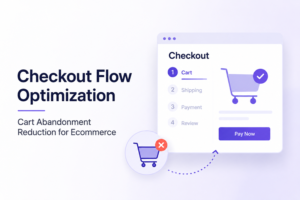
3. Under-optimized Checkout Flow
Each additional step in checkout reduces completion probability. Payment friction, lack of trust signals, and poor mobile optimization drive drop-offs.
4. Weak Product Page Economics
Product pages fail when they do not answer key buying questions:
- Why this product?
- Why now?
- Why trust this brand?
For deeper insight into conversion gaps, see conversion rate optimization strategies.
The CRO Mechanism Behind Cost Reduction
Cost optimization in ecommerce is driven by conversion rate optimization (CRO). The mechanism is simple:
Higher conversion rate equals More revenue per visitor equals Lower effective acquisition cost
But execution is not simple. It requires:
- Behavioral data analysis
- Funnel diagnostics
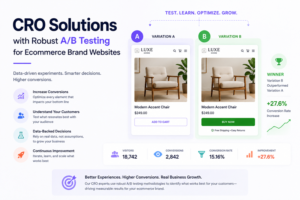
- Experimentation at scale
For example, improving product page clarity can increase add-to-cart rate. Improving checkout UX can increase purchase completion. Together, these changes reduce wasted traffic.
You can explore related CRO insights here:
- How to improve ecommerce conversion rates
- Ecommerce funnel optimization guide
How AI Changes Ecommerce Cost Optimization
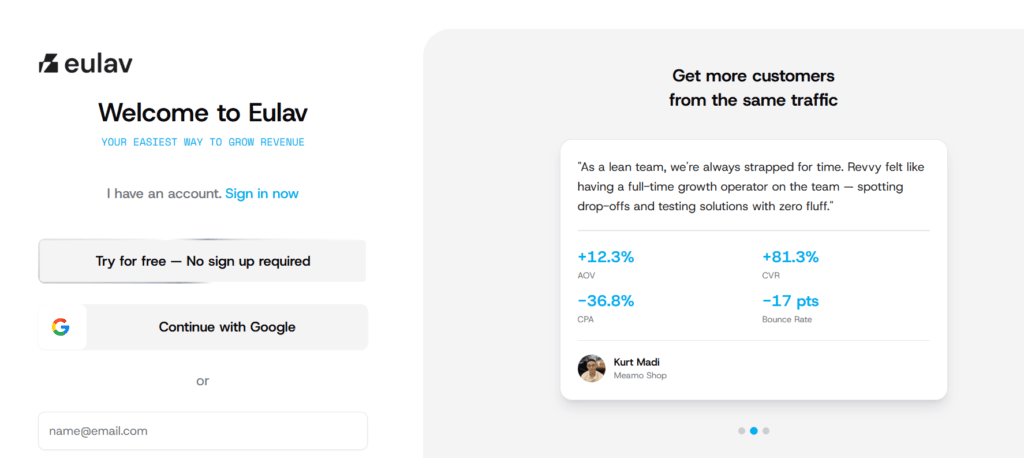
Manual audits miss patterns across thousands of sessions. AI systems can process behavioral data at scale and identify hidden inefficiencies.
This is where tools like Revvy AI come in.
Revvy AI is not a chatbot. It is an AI agent that audits your entire store, detects what is suppressing conversions, and gives a prioritized fix list.
Mechanism:
- Analyzes user flow and drop-off points
- Identifies high-impact friction areas
- Quantifies revenue loss per issue
- Recommends specific fixes ranked by ROI
This shifts optimization from guesswork to data-driven execution.
For more context, review AI in ecommerce optimization.
High-Impact Cost Optimization Strategies
Optimize for Revenue Per Visitor, Not Traffic Volume
Traffic without conversion is cost. Focus on increasing revenue per session.
Key levers:
- Improve product page clarity
- Strengthen value propositions
- Reduce decision friction
Reduce Checkout Drop-offs
Shorten the path to purchase.
Focus areas:
- Guest checkout
- Faster payment options
- Trust signals
Prioritize High-Intent Pages
Not all pages have equal impact. Product pages and checkout flows drive most revenue.
Fix these first before scaling acquisition.
Eliminate Low-ROI Spend
Pause campaigns that do not convert efficiently. Reallocate budget to high-performing channels.
For advanced CRO execution, see ecommerce CRO case studies.
Real-World Scenario
A mid-sized ecommerce store spending $50,000 monthly on ads improved conversion rate from 2.1% to 3.0%.
See what Revvy finds in your own store, no card required.
Results:
- Same traffic volume
- 43% increase in orders
- Effective CPA reduced by ~30%
No additional ad spend was required. The improvement came from fixing product page messaging and checkout friction identified through behavioral analysis.
This is the core principle of ecommerce cost optimization. Growth without proportional cost increase.
FAQs: Ecommerce Cost Optimization
It is the process of reducing wasted spend while increasing revenue efficiency. It focuses on improving conversion rate, reducing friction, and reallocating budget based on performance.
You reduce CAC by increasing conversion rate and improving funnel efficiency. This means more conversions from the same traffic.
For most stores, yes. Improving conversion rate delivers faster ROI than acquiring more traffic with existing inefficiencies.
Advanced tools analyze behavior and identify revenue leaks. AI-driven platforms like Revvy AI automate this process and prioritize fixes based on impact.
Conclusion
Ecommerce cost optimization is not about cutting spend. It is about increasing efficiency across the funnel.
The brands that win are not those with the biggest budgets. They are the ones that convert traffic better.
If your store is scaling traffic but margins are shrinking, the issue is not acquisition. It is conversion efficiency.
Audit your funnel, remove friction, and prioritize high-impact fixes. If you want a faster, data-driven approach, start with Revvy AI and identify exactly where your revenue is leaking.
The next growth phase will not come from more traffic. It will come from better performance per visitor.