If your store converts at 2 percent, the instinct is to chase more traffic. More ads. More SEO. More reach.
But here is what most brands miss. You can double traffic and still struggle if your pricing is misaligned with how users perceive value.
The fastest way to unlock revenue is not more visitors. It is better pricing decisions backed by real user behavior. That is exactly what split testing for pricing is built for.
What Split Testing Pricing Really Means
Split testing for pricing is the process of showing different price points or pricing structures to segments of users and measuring which version drives higher revenue.
It is not about guessing. It is about controlled experiments.
Instead of asking “What price should we charge?”, you test:
- Does $49 convert better than $59
- Does a bundle outperform a single product
- Does anchoring with a higher price increase perceived value
Most ecommerce brands leave this untapped because pricing feels risky. But the bigger risk is staying with a price that silently kills conversions.
Pro Tip:
Let Revvy AI agent analyze your store performance, uncover pricing friction points, and deliver a clear split testing strategy to maximize revenue and improve profitability
Split Testing for Pricing to Maximize Revenue
Why Pricing Tests Drive Faster ROI Than Traffic Growth
Increasing traffic by 20 percent often requires more ad spend or months of SEO work. But improving pricing efficiency can increase revenue instantly.
Here is a simple scenario.
You have 100,000 monthly visitors and a 2 percent conversion rate. That gives you 2,000 orders.
If your average order value increases from $50 to $60 through pricing optimization, your revenue jumps significantly without adding a single visitor.
That is the power of pricing tests.
The Science Behind High-Converting Pricing
Pricing is not just math. It is psychology combined with behavioral data.
When you run split testing for pricing, you are testing how users perceive value.
Key Variables You Should Be Testing
Instead of randomly changing numbers, focus on high-impact variables:
- Price anchoring (showing higher original price)
- Bundle pricing vs individual pricing
- Subscription vs one-time pricing
- Psychological pricing like $49 vs $50
But here is where most brands get it wrong. They test price in isolation.
Real optimization comes from combining pricing with user experience insights. That is where tools like Revvy AI come in. Instead of just telling you what users click, it shows why they hesitate and where pricing creates friction.
How to Structure a Pricing Split Test That Actually Works
Step 1: Define a Revenue-Focused Goal
Do not test for clicks. Test for revenue per visitor.
Your primary metric should be:
- Revenue per user
- Conversion rate
- Average order value
This ensures you do not accidentally increase conversions while reducing total revenue.
Step 2: Segment Your Traffic Properly
Not all users behave the same.
Returning customers may respond differently to price changes than new visitors. Mobile users may react differently than desktop users.
Advanced brands segment by:
- Traffic source
- Device type
- Purchase intent
This is why combining pricing tests with insights from AI ecommerce analytics is critical.
Step 3: Run Controlled Experiments
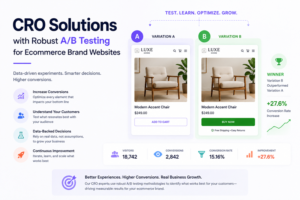
A proper split test means:
- 50 percent of users see version A
- 50 percent see version B
- Test runs long enough for statistical significance
Do not stop tests early because one version looks better. That leads to false winners.
Step 4: Analyze Behavioral Signals
Numbers alone do not tell the full story.
You need to understand:
- Where users drop off
- How long they stay on pricing sections
- What causes hesitation
This is where Revvy AI becomes powerful. It connects behavior with revenue impact, helping you prioritize fixes that actually increase profit.
You can explore deeper insights in AI conversion rate optimization strategies and AI for ecommerce optimization.
Real-World Scenario: Pricing Test That Increased Revenue
An ecommerce brand selling fitness products tested two pricing strategies:
Version A
Single product priced at $79
Version B
Bundle of two products priced at $129
At first glance, Version A had higher conversion. But Version B generated higher revenue per user.
After running the test for 30 days:
- Conversion rate dropped slightly
- Average order value increased significantly
- Total revenue increased by over 25 percent
This is why focusing only on conversion rate can mislead you.
Advanced Pricing Strategies Most Brands Ignore
Dynamic Pricing Based on Intent
High-intent users are often willing to pay more. Low-intent users need incentives.
See what Revvy finds in your own store, no card required.
Instead of one fixed price, you can adjust pricing based on:
- Time on site
- Pages viewed
- Cart activity
This approach aligns with strategies discussed in reduce cart abandonment with AI.
Decoy Pricing Strategy
Introduce a third pricing option that makes your target option look more valuable.
For example:
- Basic plan at $29
- Pro plan at $59
- Premium plan at $99
Most users choose Pro because it feels like the best value.
Anchoring With Discounts
Showing a higher original price before the discounted price increases perceived value.
But it must be tested. Not all audiences respond the same way.
Common Mistakes in Pricing Split Testing
Even advanced brands make these mistakes:
- Testing too many variables at once
- Ending tests too early
- Ignoring user behavior data
- Focusing only on conversion rate
Avoid these and your results will be far more reliable.
FAQ: Split Testing for Pricing
A pricing test should run until you reach statistical significance. This usually takes 2 to 4 weeks depending on traffic volume.
Yes, and that is not always bad. A lower conversion rate with higher average order value can still increase total revenue.
There is no universal answer. The best pricing strategy is the one validated by your own data through testing.
While basic tools can run tests, advanced tools like Revvy AI help you understand why users behave the way they do, not just what they do.