Every dollar you spend on ads that does not convert is a dollar you are paying twice: once to get the click, and again when you never see that customer return. If you run a Shopify store in Quebec and you are stuck in the loop of pouring budget into Google or Meta ads without a clear picture of what is actually working, you are not alone. Most Quebec ecommerce merchants are making their biggest marketing spend decisions based on gut instinct rather than real ROI data.
There is a smarter way to approach this. Understanding the true return on investment from SEO vs. paid ads for Quebec ecommerce gives you the clarity to stop guessing and start allocating your budget where it genuinely compounds. This article lays out the real numbers, the local nuances that change the equation for Montreal and Quebec-based merchants, and how AI tools are now helping stores get more from both channels simultaneously.
SEO vs. Paid Ads: What the ROI Data Actually Shows
The debate between organic search and paid advertising has been running for years, but the 2025 and 2026 data is as clear as it has ever been. According to industry benchmarks, a well-executed SEO campaign delivers a median ROI of approximately 748%, meaning roughly $7.48 back for every dollar invested. Organic search also generates leads at around $31 per acquisition, compared to roughly $181 per lead through paid channels. That is nearly a six-fold difference in cost efficiency.
Paid ads are not without merit. The average Google Ads conversion rate sits around 7.52%, and for merchants who need immediate revenue while their organic presence builds, paid campaigns serve a real purpose. The problem is the economics over time. The moment your ad budget stops, so does your traffic. SEO, by contrast, keeps compounding. Content that ranks today will still be driving traffic in 18 months without any incremental spend.
For Quebec ecommerce brands specifically, this distinction matters more than it does in markets where ad costs are lower. Competition for French-language ecommerce keywords in Quebec is still relatively accessible compared to English-language markets, which means the window for building strong organic rankings at lower cost is still open. That window will not stay open forever as more brands wake up to the opportunity.
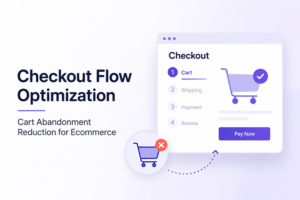
Let AI Spot and Fix Cart Blockers for You Identifying exactly why people abandon your cart can be hard to pin down. That’s where tools like Eulav Grow come in.
Why Quebec Ecommerce Brands Face a Unique ROI Challenge
Running a Shopify store that targets Quebec consumers introduces a layer of complexity that generic marketing advice never accounts for. The province’s bilingual reality means your SEO and ad strategy may need to operate across two languages, and the performance data for each will look different. French-language search queries often have lower competition and lower cost-per-click in paid environments, but they also require original French-language content to rank organically.
Beyond language, Quebec consumers tend to be more deliberate shoppers. They research before they buy. They check return policies. They want to know your brand is real and accountable. This behavior pattern actually favors organic search traffic over paid in the long run. When a Quebec shopper finds your store through a Google search for a specific product, they have already demonstrated intent. When they find you through a paid ad, they are often earlier in the consideration cycle and more likely to bounce.
Understanding how your ecommerce conversion rate behaves across different traffic sources is one of the most underrated insights a Quebec merchant can have. Organic visitors typically convert at a higher rate than paid traffic for most product categories, and the lifetime value of customers acquired through organic search tends to be stronger as well.
The Hidden Cost of Relying Too Heavily on Paid Ads
There is a scenario that plays out regularly with Montreal Shopify merchants. A store finds a paid ad formula that works, scales it, and then one of a few things happens: ad costs rise as competitors enter the auction, the algorithm shifts, iOS privacy changes reduce targeting accuracy, or the product margins can no longer absorb the cost per acquisition. Suddenly, the whole revenue engine stalls.
This is not a hypothetical. It is what happens when paid advertising is treated as a strategy rather than a tactic. Paid ads are exceptional for testing, for launching new products, for capturing demand during seasonal peaks, and for filling the gap while your organic presence builds. Using them as the only growth lever is a fragile position.
The merchants who build sustainable Quebec ecommerce businesses are the ones who treat their Shopify store itself as a growth asset, investing in SEO-driven content, on-site experience, and conversion optimization simultaneously. Learning about ecommerce lifetime value changes how you think about customer acquisition entirely. A customer acquired through paid ads at $60 CAC on a $55 order is a loss. That same customer acquired through organic search at $12 CAC, who then returns twice more, is a business.
How SEO and Paid Ads Work Better Together for Quebec Stores
The most effective Quebec ecommerce brands in 2026 are not choosing between SEO and paid ads. They are using paid campaigns to fund and inform their organic strategy, and using their organic authority to make paid campaigns more efficient.
Here is how that loop works in practice. Paid ads reveal which keywords convert at the highest rates. That data informs which content to create for organic search. As organic rankings grow for those high-converting terms, paid spend can be reduced or redirected to new product launches and untested keywords. Meanwhile, a domain with strong organic content and authority tends to earn better Quality Scores in Google Ads, which drives down cost-per-click for paid campaigns on the same domain.
This is why landing page split testing matters for both channels. A landing page optimized through A/B testing improves paid ad quality scores and organic dwell time at the same time. Improvements in one channel ripple into the other when the underlying store experience is strong.
Similarly, how you present your products visually affects both channels. Images that are optimized for mobile load fast and present trust signals effectively will convert better regardless of whether the visitor arrived through an ad or an organic result.
Where AI Fits Into the SEO vs. Paid Ads Decision
The biggest obstacle most Quebec merchants face is not budget. It is information. Without clean data on where traffic is converting, which pages are leaking revenue, and which customer segments have the highest lifetime value, any decision about SEO or paid spend is essentially a guess dressed up as a strategy.
See what Revvy finds in your own store, no card required.
AI-powered tools have changed this. Platforms that continuously monitor your Shopify store can now surface conversion leaks, flag technical issues hurting your organic rankings, and identify which pages are failing to retain paid traffic. This is the kind of insight that previously required a team of analysts and weeks of manual reporting.
Eulav AI agent audits your store, finds what is killing sales, and shows you exactly what to fix. For Quebec merchants trying to decide where to put their next dollar of marketing budget, having that level of store-level clarity changes the entire conversation. You stop debating SEO vs. paid ads in the abstract and start making decisions based on what your specific store actually needs.
Pairing that diagnostic capability with smart conversion-optimized Shopify themes and solid on-site fundamentals means every traffic source, organic or paid, lands on a store that is built to close. The channel debate becomes secondary when the destination converts.
FAQs: SEO vs. Paid Ads
For brand-new stores with no organic rankings, paid ads are the right starting point. They generate immediate revenue and provide conversion data that informs your SEO content strategy. As your organic presence builds, typically between months 6 and 12, you can begin shifting budget toward SEO. The goal is to run both channels concurrently rather than sequentially.
Most ecommerce stores see positive SEO ROI within 6 to 12 months, with a typical break-even point around nine months. For Quebec stores targeting French-language keywords in less competitive categories, this timeline can be shorter because the organic ranking bar is lower.
Generally, yes. French-language commercial keywords in Quebec tend to have lower cost-per-click than equivalent English-language terms, particularly outside of highly competitive categories like insurance or finance. This makes bilingual paid strategies more efficient for Quebec merchants than a purely English-language approach.
Paid traffic and organic traffic arrive at your store with different levels of intent and trust. Organic visitors have typically done more research and are further along in their buying decision. If your paid traffic conversion rate is significantly lower, the issue is often either audience targeting (reaching people too early in the funnel) or a disconnect between your ad creative and the landing page experience.
Directly and significantly. A store converting at 1.5% that doubles its rate to 3% effectively doubles the return from every traffic source, paid or organic, without spending an additional dollar on acquisition. This is why improving your Shopify store’s on-site experience is often the highest-ROI action available before you increase any ad budget.
The Bottom Line
SEO vs. paid ads is not really a competition. It is a sequencing and allocation question. For Quebec ecommerce brands, the data points toward organic search as the stronger long-term ROI driver, while paid advertising remains essential for speed, testing, and seasonal demand. The merchants winning in this market are running both channels intelligently, using each to strengthen the other.
What ties everything together is knowing exactly how your store is performing at the conversion layer. No SEO strategy and no paid campaign will reach its potential if the store itself is losing customers to friction, slow pages, or broken checkout flows.