California ecommerce brands often face the same problem: paid ads can scale revenue fast, but margins shrink just as fast. CPMs on Meta and Google are competitive in large markets like Los Angeles, San Francisco, and San Diego. Many brands grow top-line sales while net profit stays flat.
That is where a stronger acquisition mix matters. SEO vs. Paid Ads is not about choosing one channel. It is about understanding which channel creates durable returns, lower customer acquisition cost, and higher lifetime value. For brands serious about efficiency, tools like Revvy Ai help uncover where traffic and conversions are leaking.
Why California Ecommerce Brands Feel More Pressure
California has one of the largest consumer markets in the U.S., but it also has dense competition. More advertisers bidding means higher costs.
According to industry benchmark data from WordStream, Google Ads costs in many commercial categories continue to rise. When CPC increases but site conversion rate stays flat, profit declines.
The formula is simple:
CAC = Ad Spend / New Customers
If ad spend rises faster than new customer growth, CAC gets worse.
SEO works differently. Once rankings are earned, each incremental click does not require direct payment. That creates compounding economics over time.
Pro Tip:
Find and fix the hidden issues in your marketing channels in just a minute
SEO vs. Paid Ads: How ROI Actually Works
Many brands compare channels incorrectly. They compare revenue, not contribution margin.
A better model:
- Revenue generated
- Gross margin after product cost
- Marketing spend
- Operational cost
- Net profit
Paid ads usually win on speed. SEO usually wins on efficiency after maturity.
Paid Ads ROI Model
Paid ads are useful when you need:
- Immediate traffic
- Product launch velocity
- Fast testing of offers
- Seasonal demand capture
But performance decays when:
- CPC rises
- Conversion rate falls
- Landing pages underperform
- Retargeting audiences saturate
SEO ROI Model
SEO performs better when you need:
- Lower blended CAC
- Stable non-paid traffic
- Higher branded search demand
- Long-term market share
Organic traffic also supports paid ads. Users who first discover you through search often convert later through retargeting.
Where Most Brands Lose Money
Traffic is rarely the core issue. Conversion inefficiency is.
Many California stores spend heavily on ads while losing 20% to 40% of possible revenue through:
- Slow mobile pages
- Weak product page trust signals
- Poor filtering and navigation
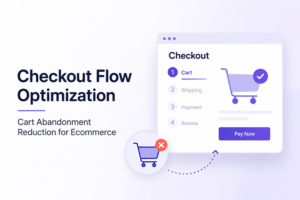
- Checkout friction
- Low-intent landing page mismatch
This is where Revvy Ai becomes valuable. It audits stores, finds friction points, and shows what is suppressing conversions before more budget is wasted.
Why CRO Changes the SEO vs. Paid Ads Debate
Without CRO, both SEO and paid traffic underperform.
If conversion rate rises from 2.0% to 3.0%, that is a 50% lift in orders from the same traffic base.
That means:
- SEO traffic becomes more valuable
- Paid CAC improves
- ROAS increases
- Revenue per visitor grows
For enterprise-minded brands, the real question is not SEO vs. ads. It is traffic efficiency first.
See what Revvy finds in your own store, no card required.
A Smarter Budget Split for California Brands
For many brands doing $50k to $500k monthly revenue, a more rational mix looks like this:
Growth Stage 1: Need Fast Revenue
Use paid ads heavily, but fix conversion leaks first with Revvy Ai.
Growth Stage 2: Rising CAC
Shift budget into SEO content, technical SEO, category pages, and link acquisition.
Growth Stage 3: Mature Brand
Use SEO for demand capture and authority. Use ads for remarketing, launches, and profitable campaigns only.
Technical SEO Areas That Usually Move Revenue
Advanced brands should focus on:
Crawl Efficiency
If Google wastes crawl budget on thin or duplicate URLs, high-value pages get delayed.
Collection Page Intent Mapping
Category pages should match how users search, not how brands organize inventory.
Internal Link Flow
Strategic linking passes authority into product and collection pages.
Structured Data
Schema improves eligibility for rich results and can increase click-through rate.
These changes often outperform writing random blog content.
FAQ: SEO vs. Paid Ads
SEO is usually better for long-term ROI. Paid ads are better for immediate scale. Best results come from using both.
Most brands see meaningful movement in 3 to 6 months depending on competition and site quality.
Usually rising CPC, weak offers, poor landing pages, or conversion friction.
Conversion rate. More traffic to a weak store only increases waste.