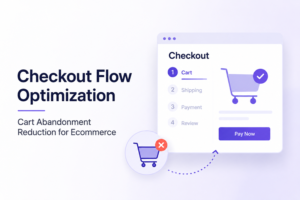
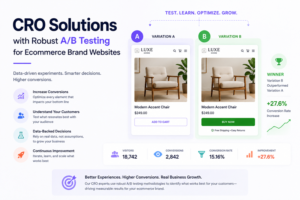
Your Shopify store is getting visits, product views, and add-to-carts, yet orders are still underperforming. For brands in the East of England, that usually means the problem is not traffic volume. It is conversion leakage inside the funnel. Across ecommerce, average cart abandonment is still about 70%, which means most stores are losing revenue after buyer intent is already visible.
The real fix is not another discount popup. It is technical CRO. That means diagnosing exactly where intent breaks between product view, cart, checkout start, payment, and purchase.
Why People Abandon Carts on Shopify in East of England
The biggest issue is usually not one major bug. It is a chain of small frictions.
First, many stores reveal the full cost too late. When shipping, tax, or delivery timing becomes clear only in checkout, buyers pause and recalculate value. Baymard’s checkout research consistently shows extra costs are one of the top reasons people leave.
Second, the product page often creates interest without creating buying confidence. A shopper may add to cart before fully resolving doubts around returns, delivery, fit, quality, or payment trust. That creates weak cart intent, not strong purchase intent.
Third, checkout may be technically functional but commercially weak. Common losses come from poor guest checkout visibility, too many fields, low wallet adoption, weak error handling, or poor mobile form design. Baymard reports that 62% of sites still fail to make guest checkout the most prominent option.
Find out what’s stopping customers from completing purchases and fix the issues costing your Shopify store revenue.
Advanced Technical Fixes That Actually Reduce Abandonment
Start by measuring micro-conversions, not just overall conversion rate. Break the journey into product view to add-to-cart, add-to-cart to checkout, checkout to payment, and payment to order completion. This tells you where the leak actually lives.
Then audit buyer hesitation signals:
- dead clicks on payment or delivery elements
- repeated quantity edits in cart
- mobile rage clicks near form fields
- abandonment by device, channel, and landing page type
If mobile paid traffic abandons more than branded desktop traffic, you likely have a session-quality mismatch or a checkout UX issue, not a general storewide problem.
See what Revvy finds in your own store, no card required.
Use Eulav AI agent to identify structural blockers like weak information hierarchy, low CTA visibility, cluttered product layouts, and friction near checkout. That kind of diagnosis matters more for larger stores because repeated template issues can quietly damage revenue across hundreds of sessions.
FAQs: Why are People Abandoning Carts on My Shopify Store in East of England?
Because add-to-cart is often curiosity, not commitment. Buyers leave when cost clarity, trust, payment flow, or delivery certainty breaks late in the funnel.
Late-stage friction. That includes hidden fees, poor guest checkout visibility, weak mobile checkout design, and unnecessary form effort.
Yes. AI is useful when it identifies repeated patterns humans miss across templates, devices, and buyer stages. Eulav’s own CRO content highlights AI’s role in spotting hesitation and conversion blockers faster.
No. Recovery emails can help, but prevention is better. Fixing the reason people leave will usually outperform chasing them after the exit.
If your Shopify store has traffic but weak cart completion, the smart move is not more ad spend. It is better diagnosis. Use Eulav AI agent to identify friction, missed trust signals, weak product page structure, confusing CTAs, and UX issues.